

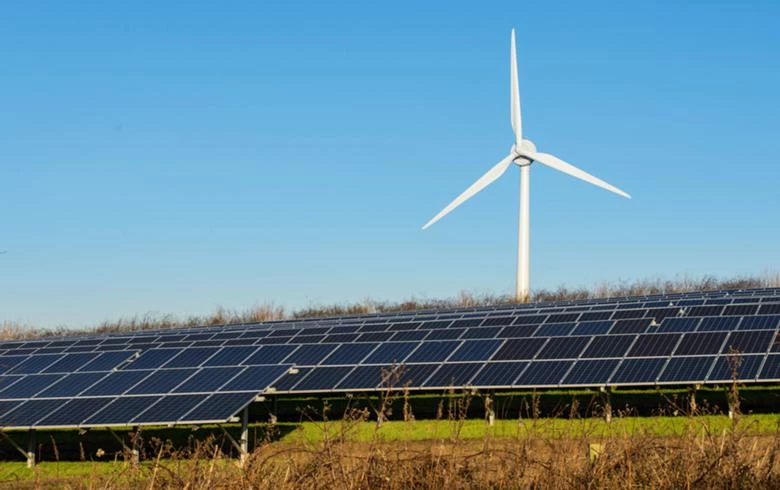

Renewable energy remained the European Union’s largest source of electricity generation in 2025, accounting for 47.2% of total output, although renewable electricity production edged down as lower hydropower generation offset growth in other sources, according to preliminary data published by Eurostat on Monday.
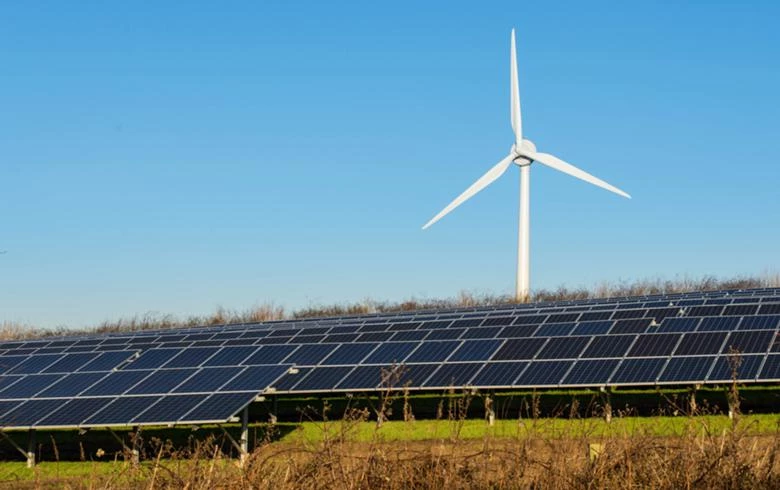
Author: Gerry Machen. License: Creative Commons, Attribution-NoDerivs 2.0 Generic.
Renewables generated 1.33 million GWh of electricity during the year, down 0.5% from 2024. Despite the decline in electricity generation, the overall supply of renewable energy increased by 1.4% year-on-year to 11.5 million terajoules (TJ), reflecting higher renewable energy use across the economy.
Eurostat said the drop in hydropower output was the main factor behind the slight decline in renewable electricity generation.
Natural gas supply increased for a second consecutive year, rising 2.3% to around 13.1 million TJ after a sharp decline in 2023.
Power your inbox with Renewables Now’s 4 free newsletters. Browse and subscribe for free.
Electricity generation from fossil fuels rose by 3.2% from 2024 to 0.83 million GWh, accounting for 29.6% of the EU’s total electricity production.
Nuclear generation increased by 0.2% to 650,648 GWh, representing 23.2% of electricity output.
Coal supply continued to fall to record lows. Brown coal supply declined 7.7% to 184.7 million tonnes, while hard coal supply fell 3.2% to 107.1 million tonnes, the lowest levels since Eurostat’s records began in 1990.
The supply of petroleum products decreased by 2.8% to 448.7 million tonnes, although Eurostat noted that the 2025 figure is slightly underestimated because of confidential refinery output data for several petroleum products in Lithuania.
The EU statistics office said the figures are based on preliminary annual energy supply data, which measure the availability of energy for electricity and heat generation as well as consumption by industry, transport, services and households.