


Newly installed battery energy storage capacity in Germany jumped by 91% in the first three quarters of this year compared to the same period in 2025. All told, more than 500,000 new storage systems with a combined capacity of around 8.2 GWh were commissioned across the country.
The figures come from an analysis of the Federal Network Agency’s (Bundesnetzagentur) core energy market data register, conducted by the German Solar Association (BSW-Solar).
Growth was particularly strong in the utility-scale storage segment, as has been expected for some time. Deployment in this sector reached roughly 3.8 GWh, a massive increase of around 350% year-on-year.
Utility-scale batteries consequently accounted for just under 46% of all newly installed storage capacity during the nine-month period.
Meanwhile, residential storage additions rose 20% to 3.2 GWh, and commercial and industrial (C&I) storage climbed 67% to about 0.7 GWh.
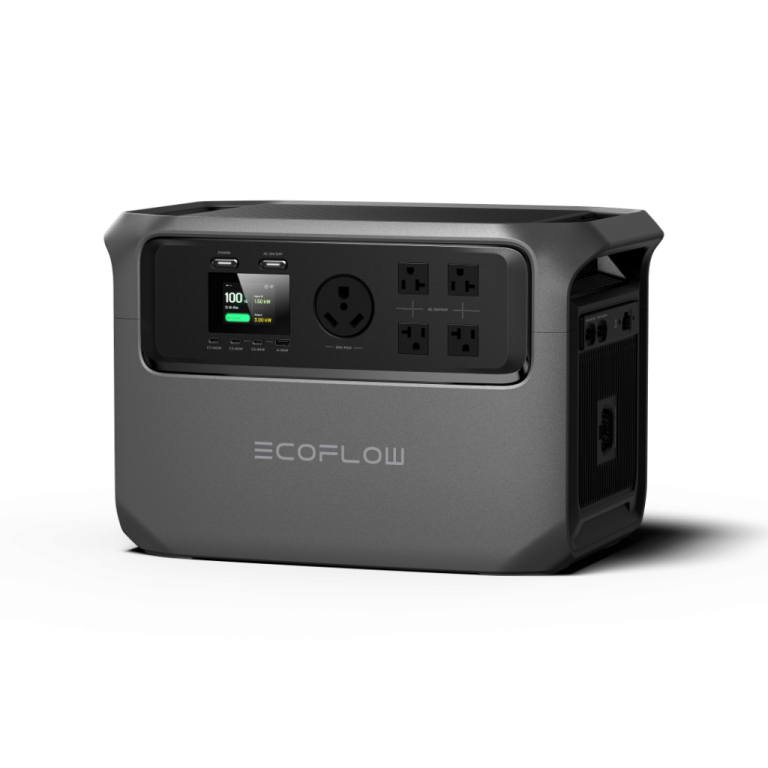
Micro-storage systems, typically paired with plug-in balcony solar setups, grew by 33% to approximately 0.5 GWh. The market figures are based on data recorded as of October 12, 2026, and typically final installation numbers do climb as late registrations filter into the database, which is allowed in the country.
Industry pushes for 15 reform measures
For the full year, BSW-Solar expects total new additions to easily clear the 10 GWh mark. However, the association argues that deployment must accelerate to integrate Germany’s rapidly expanding photovoltaic and wind fleets into the electricity system cost-effectively. A position paper outlining 15 concrete reform proposals include a legally binding right to fair and flexible grid connection agreements, one of the hottest topics in the world of utility-scale storage.
Under the association’s vision, distribution system operators (DSOs) would also be required to launch targeted tenders for grid-supportive battery storage directly at substations. Another central demand targets redispatch rules: when managing grid congestion, BSW-Solar wants the grid connection point itself, rather than the individual generation asset, to be the decisive factor in the future. In practice, this would allow excess solar power to be soaked up by a co-located battery during temporary grid bottlenecks, rather than forcing operators to curtail the photovoltaic plant.
The association points to the financial savings that additional storage could unlock. A study presented in July by the Fraunhofer Institute for Energy Economics and Energy System Technology (Fraunhofer IEE) calculated that a scenario featuring 20 GW of additional battery storage power capacity with a four-hour duration would relieve consumers and the federal budget by around €3.9 billion annually in modelled savings
Further reform measures are called for, with pv magazine Germany following the action closely.
The post Germany’s battery storage additions surge to 8.2 GWh in first nine months of 2026 appeared first on Energy Storage.