

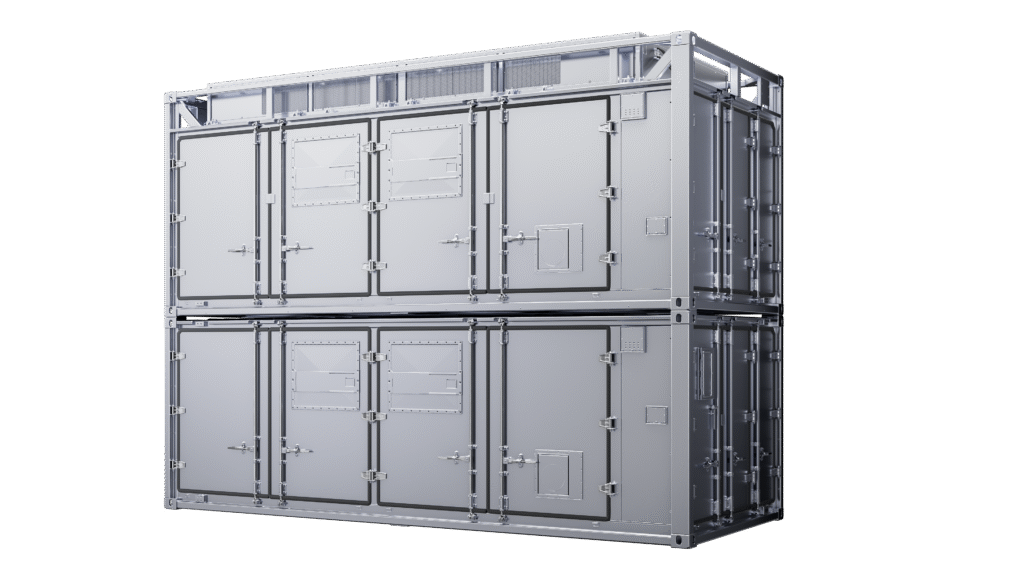
China-headquartered energy storage manufacturer Contemporary Amperex Technology Co., Limited (CATL) has conducted the global reveal of its 9 MWh Tener+ battery energy storage system (BESS) at All Energy Australia 2026, where it also showcased the Tener Sodium BESS, indicating there is deep interest to progress the technology in Australia, for both on and off-grid projects.
CATL Australia and New Zealand General Manager Zane Zhou told pv magazine sodium is an important part of CATL’s strategy and there is significant interest for its sodium batteries in Australia.
“Not just in the [Australian] National Electricity Market (NEM) but also for off-grid applications,” Zhou confirmed.
“Australia is a strategic market for CATL and one of the great renewable energy markets where we have received very deep interest in sodium batteries.”
Zhou said having both lithium-ion and sodium-ion platforms however gives CATL and its customers more options.
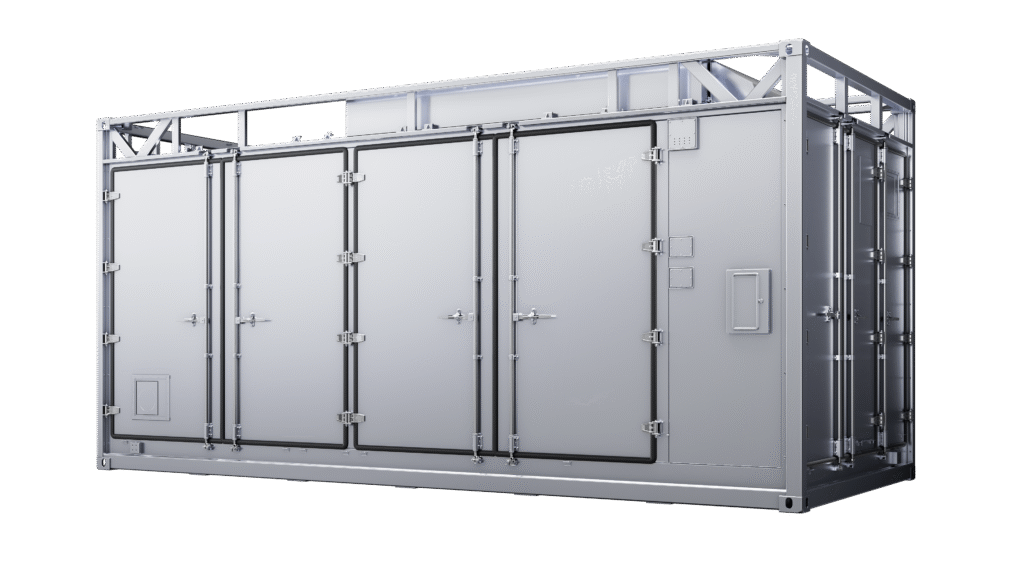
Tener+ BESS
The Tener+ is a 9 MWh ultra-high capacity energy storage system that reduces the number of containers needed by 40% and the project footprint by 35%, making it ideal for projects that are facing land constraints.
CATL said the Tener+ intelligent thermal management system supports a higher round-trip efficiency and lower auxiliary power consumption. Multiple Tener+ batteries can be simultaneously commissioned with a single click to streamline project deployment.
Designed for a 25-year lifespan, Tener+ also combines liquid cooling with protection suited to humid and coastal environments. It operates below 65 dBA without heat-island effects, making it suitable for deployment near residential communities. Its thermal management strategies maintain cells at optimal operating temperatures to support its performance over the battery’s lifespan.
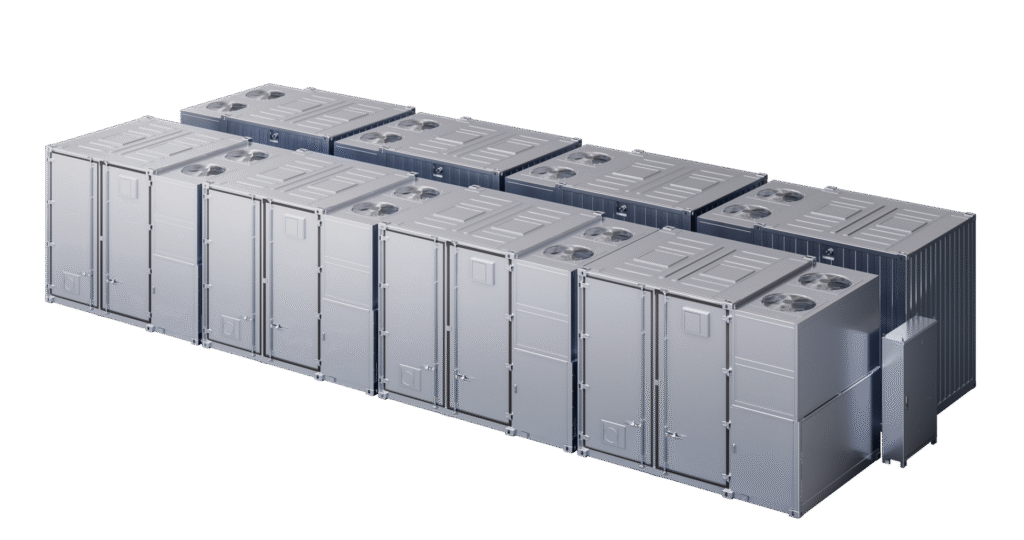
Tener Sodium
TENER Sodium is one of the world’s first mass-produced, field-validated sodium-ion battery energy storage systems delivering more than 30 MWh through its modular cabinet architecture and lowers total EPC costs by more than 10% when compared to lithium iron phosphate battery (LFP) containerised energy storage solutions.
Built for Australia’s heat, TENER Sodium operates in temperatures of up to 55°C and delivers more than 10,000 cycles at 45°C. It delivers 95% round-trip efficiency with an operating lifespan of more than 20 years.
“Developers need confidence that their batteries can handle the expected cycling to trade in the NEM and to perform throughout the lifespan of batteries installed in a utility-scale project,” Zhou said.
“That is what Tener+ and Tener Sodium are designed to deliver. We’re offering both sodium-ion and lithium-ion technologies to give asset owners and developers the flexibility to choose the right technology for their success.”
Sodium is also more abundant and geographically widespread than lithium and delivers an additional pathway for battery supply chains.
Local industry partnerships
Recognising an increasing need in Australia for energy storage systems with grid-forming capability as coal-fired power stations retire, along with addressing skills, grid connections and integration risks for large-scale battery projects, CATL also signed at All Energy, three Memorandum of Understandings (MoUs) respectively with the Hitachi Energy, EPEC Group and the University of New South Wales (UNSW) Sydney.
“CATL is working with Hitachi Energy, EPEC Group, ESVL and UNSW Sydney to give our Australian customers greater confidence in how our technology is integrated, validated and supported throughout a project’s life. Together, we’re building the local expertise needed to deliver reliable battery projects in the long-term,” Zhou said.
CATL’s DC battery products and Hitachi Energy’s power conversion systems will form the basis of a proposed integrated offering in Australia and the Asia Pacific region, with the partnership aiming to improve compatibility, standardise project delivery and to reduce integration risk.
A collaboration with EPEC Group and the Xiamen Empirical Energy Storage Research Institute (ESVL) will combine CATL’s energy storage technology with EPEC’s grid integration and engineering delivery expertise, and ESVL’s full-scale system validation.
The parties aim to strengthen technical validation and accelerate the delivery of reliable, bankable and grid-compliant energy storage projects in Australia.
A strategic partnership with UNSW Sydney includes jointly developing a Centre for Integrated Renewable Energy Training and Innovation (CIRETI) in Western Sydney, NSW, to advance the skills and capabilities needed for Australia’s clean energy transition.
Birdwood Energy
The MoUs build on CATL’s work with Australian customers, including Melbourne-based investor Birdwood Energy, which has selected CATL as the technology partner for the Barandudua Electrical Energy Reserve, a 400 MW /1,860 MWh battery near Wodonga in Victoria.
Birdwood Australia Managing Director Alex Marriott-Smith said Baranduda is a key project for Birdwood’s Australian business and its investors.
“Identifying the right technology and delivery partners for the project was therefore critical during the procurement phase. Following a rigorous process that reviewed cost, product suitability and delivery requirements, CATL was selected to provide the project’s battery units.,” Marriott-Smith said.”
Zhou added that CATL’s commitment to Australia goes beyond supplying energy storage systems.
“We’re investing in people, partnerships and capability, from training the next generation of renewable energy professionals to working with our customers and partners to connect and deliver the critical projects Australia’s grid needs,” Zhou said.
CATL has led global energy storage battery shipments for five consecutive years, with a 30.4% market share in 2025, according to SNE Research. It has been on BloombergNEF’s Tier 1 energy storage list every quarter since Q1 2024. CATL has more than 3,000 energy storage projects worldwide and an installed capacity of over 17GWh of projects in Australia.
The post CATL Tener+ 9 MWh BESS makes global debut, says market has ‘deep interest’ in Tener Sodium appeared first on Energy Storage.