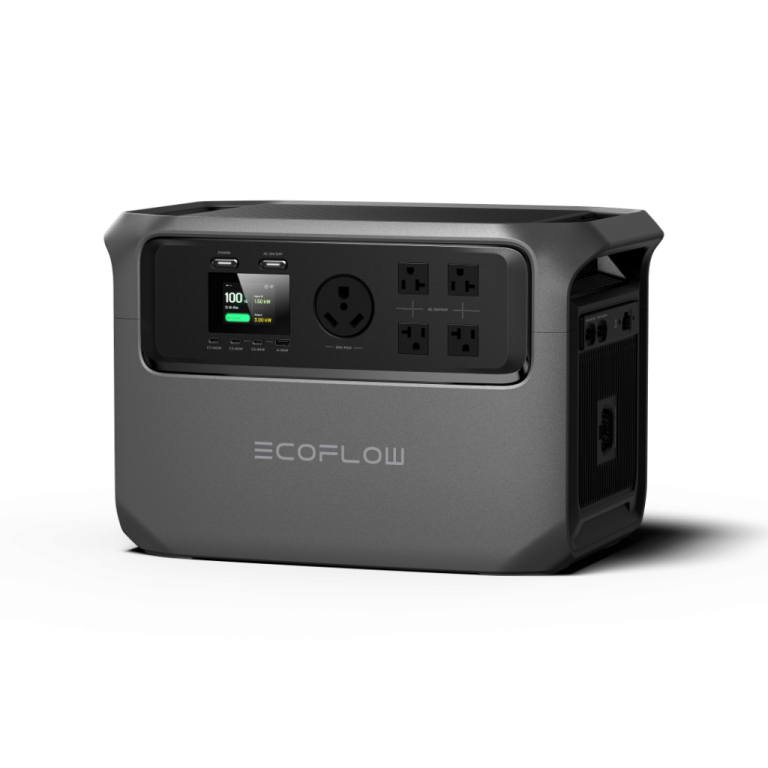



South Korea’s Ministry of Climate, Energy and Environment has issued guidelines for classifying outdoor energy storage systems (ESS) under building rules, which it says could cut permitting times by up to three months and costs by up to KRW 70 million ($52,600).
The ministry developed the guidelines with the Office for Government Policy Coordination and in consultation with the Ministry of Land, Infrastructure and Transport, and began sending them to local governments nationwide last week.
Until now, local governments have classified identical ESS installations differently, as buildings, temporary buildings or structures, so developers faced different permitting procedures, timelines and costs depending on where they built.
The guidelines use Article 2 of Korea’s Building Act, with whether people can enter the facility, its structure and its use as additional criteria. ESS housed in dedicated protective enclosures that cannot be entered are classified as structures. Container-form facilities that allow limited access for inspection and maintenance are classified as temporary buildings. Dedicated non-container ESS buildings with regular human access should be treated as buildings, the ministry said. Local permitting officials also get a decision matrix.
Time and cost
Permitting an ESS classified as a building takes about two to four months and costs about KRW 30 million to KRW 80 million, according to the ministry. Permitting one as a structure takes about 0.5 to 1.5 months and costs about KRW 2 million to KRW 10 million. Structures are also exempt from building requirements such as building-coverage and floor-area ratios.
Kim Min-sung, deputy head of the government’s public-private regulatory task force, said differing local interpretations of how ESS facilities should be classified had been one of the battery industry’s main complaints.
Lee Jae-sik, the ministry’s director general for power grid policy, said ESS is “core infrastructure” supporting renewable energy expansion and grid stabilization. He added that the ministry will keep working to resolve on-site regulatory and administrative uncertainty so that ESS can be installed where and when needed.
The ministry did not announce any changes to ESS safety or fire-prevention requirements. It said it will monitor how the guidelines are applied and work with other ministries to remove unreasonable regulations.
The guidance comes as grid operator KPX runs South Korea’s third central contract market tender for standalone storage, which it announced in September, seeking 1.1 GW/6.6 GWh on the mainland and 80 MW/480 MWh on Jeju Island.
The tender follows a second auction for 540 MW/3,240 MWh of six-hour battery storage, which closed in January, and a 2024 round that awarded 65 MW/260 MWh of four-hour capacity. South Korea has also capped the setback distances local governments can impose on solar projects at 200 meters, under cabinet-approved changes that took effect in September.
The post South Korea moves to cut BESS permitting times by up to three months appeared first on Energy Storage.